
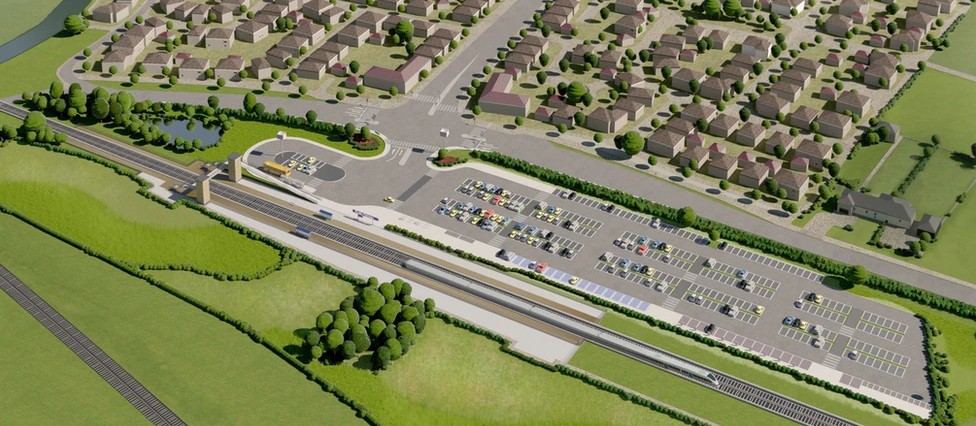
Delay Analysis Across Three Railway Stations
Project Planning Ltd was appointed to provide independent delay analysis services in relation to the construction of three new railway stations. The stations had been delivered under a separate NEC contracts but experienced significant programme overruns.
The Client required a robust, evidence-based assessment of delays in order to award the correct amount of time and agree a commercial settlement with the contractor. Our role was to establish the true causes of delay, work with the client team to determine responsibility, and assess the impact on the projects’ critical paths.
Our Role
Project Planning Ltd was engaged to:
- Review the contractors delay assessment
- Review contemporaneous Clause 31 and Clause 32 programmes
- Analyse contemporaneous project records and correspondence
- Undertake forensic delay analysis for each station
- Identify critical path impacts
- Distinguish between compensable, and contractor-responsible delays
- Provide clear findings to allow a final assessment
We applied recognised delay analysis methodologies to ensure our conclusions were technically robust and defensible.
Station 1 – Design-Driven Delays
The primary delays at the first station arose from extended design development and late issue of design change.
Key Findings:
- The design change immediately impacted procurement and construction activities.
- The project critical path changed due to the design change.
- A subsequent reduction in scope had minimal impact on the overall completion date because the omitted elements were no longer on the critical path.
- Nonetheless, the contractor had not been proactive in minimising the effect of delay.
Our analysis demonstrated that although scope was reduced, it did not materially mitigate the time impact although not all of the delay was design related
This clarity enabled the Client to separate design change from productivity issues.
Stations 2 and 3 – Post-Operational Construction Constraints
The second and third stations were delayed due to a variety of Compensation Events and contractor delays.
Key Findings:
- Construction activities were originally expected to be delivered in a green field environment but early delays meant the works were conducted after the railway became operational.
- Working within a live rail environment imposed restricted access windows, possession limitations, and enhanced safety controls.
- These constraints materially altered sequencing logic and reduced available working hours.
- The original programme assumptions were overly optimistic
Our analysis helped quantify culpability for early delays and the effect of moving remaining works into possessions. We demonstrated how the programme durations were extended primarily due to operational constraints and due to contractor performance.
Outcome
Project Planning Ltd provided the Client with:
- A clear, station-by-station delay attribution
- A defensible critical path assessment
- Quantified delay periods supported by contemporaneous evidence
- A structured narrative suitable for commercial settlement
The analyses enabled our client to approach settlement discussions from a position of strength and clarity to facilitate a fair settlement with each contractor.